

Four questions to get started with your implementation research project
As a student or researcher, how do you gain clarity on your proposed implementation research? I teach the “Implementation Science in Practice” graduate course at Western University. One of the first assignments is for students to develop an implementation science project. Students find this task quite complicated and challenging.

Understanding the application of the Four Questions through the Mobilization of Vulnerable Elders (MOVE) Initiative
I often get questions from student researchers on how the four questions have been successfully applied to a single case. One of the best examples is the Mobilization of Vulnerable Elders (MOVE) initiative to promote early mobilization practices for vulnerable seniors admitted to hospitals.

All about the ‘Thing’
Curran uses a teaching tool to help individuals think like implementation scientists by outlining five points: describing the ‘thing’ (describing the intervention), analyzing if the ‘thing’ works (utilizing effectiveness research), understanding how to do the ‘thing’ (conducting implementation research), what we do to help do the ‘thing’ (applying implementation strategies), and how much and how well the ‘thing’ is done (analyzing implementation outcomes). I consider this one of the most straightforward explanations of implementation science.

Equity in implementation research: Grade 5 ACT-i-Pass Program
I had the opportunity to learn about the Grade 5 ACT-i-Pass Program from Jason Gilliland in the Department of Geography and Environment at Western University. The goal of the program is to reduce physical inactivity among children. The program, launched in 2013, provides a pass that grants grade 5 residents of London access to a variety of activities such as swimming and basketball from participating service providers such as YMCA and Boys & Girls Club of London, with a ‘plus one’ such as a friend or family member at no cost.

Rethinking health innovation funding in Africa for maximum impact
Imagine if there was no concerted effort to eradicate smallpox after discovering the vaccine more than 200 years ago. Our world would be different today. Based on historical data of 50 million cases of smallpox reported annually in the early 1950s, the World Health Organization’s historical mortality rate of 30% for the common form of the disease, and given an infection rate of 2%, there would currently be approximately 48 million deaths and 160 million people infected annually.

Scaling up solutions: The need for a high-impact innovations list
In global health, many promising innovations struggle to reach their full potential, especially in resource-limited settings. To help address this challenge, the World Health Organization (WHO) and global health leaders could consider establishing a High-Impact Innovations List (HIIL)—a strategic tool to identify and elevate innovations with the greatest potential to improve health outcomes globally.
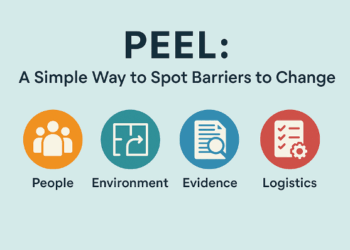
Introducing PEEL: A Simple Way to Spot Barriers to Change
July 1, 2025 Blog 7 Obidimma Ezezika One of the things I’ve learned in my…