


Visual arts-based strategies for uptake of vaccines


Understanding the Factors Affecting Meningitis A Prevention


The Vaccine Perception Project


The Vaccine Africa Project: Implementation Strategies

Effectiveness of mHealth Apps for Maternal Health Care Delivery: Systematic Review of Systematic Reviews
Globally, the use of mobile health (mHealth) apps or interventions has increased. Robust synthesis of existing systematic reviews on mHealth apps may offer useful insights to guide maternal health clinicians and policy makers. This systematic review aims to assess the effectiveness or impact of mHealth apps on maternal health care delivery globally.

Resilience throughout COVID-19: Unmasking the realities of COVID-19 and vaccination facilitators, barriers, and attitudes among Black Canadians
Black communities have suffered disproportionately higher numbers of COVID-19 cases and deaths in Canada. The present study investigated 1) experiences with COVID-19, 2) COVID-19’s impact, and 3) factors that have influenced COVID-19 vaccine acceptance and uptake among stakeholders and partners from the Federation of Black Canadians’ (FBC).

Evaluating student engagement and experiential learning in global classrooms: A qualitative case study
The global classroom is an emerging technology-based pedagogy used internationally by educational institutions. To evaluate a global classroom, we conducted a qualitative study using written reflections and semi-structured interviews of global classroom participants, based on two theoretical frameworks: Kearsley and Shneiderman’s engagement theory and Kolb’s experiential learning theory.

Interdisciplinary Pedagogy through Problem-Based Learning
This case study piloted an interdisciplinary Problem-Based Learning course, utilizing Hung’s (2006) 3C3R model. We explain the course design, curriculum, and implementation. We collected qualitative written questionnaires from students who participated in the course to investigate their learning experiences. As a result, students shed light on lessons they learned throughout the course, which led to the creation of a lessons learned guide for future instructors.







Four questions to get started with your implementation research project
As a student or researcher, how do you gain clarity on your proposed implementation research? I teach the “Implementation Science in Practice” graduate course at Western University. One of the first assignments is for students to develop an implementation science project. Students find this task quite complicated and challenging.

Understanding the application of the Four Questions through the Mobilization of Vulnerable Elders (MOVE) Initiative
I often get questions from student researchers on how the four questions have been successfully applied to a single case. One of the best examples is the Mobilization of Vulnerable Elders (MOVE) initiative to promote early mobilization practices for vulnerable seniors admitted to hospitals.

All about the ‘Thing’
Curran uses a teaching tool to help individuals think like implementation scientists by outlining five points: describing the ‘thing’ (describing the intervention), analyzing if the ‘thing’ works (utilizing effectiveness research), understanding how to do the ‘thing’ (conducting implementation research), what we do to help do the ‘thing’ (applying implementation strategies), and how much and how well the ‘thing’ is done (analyzing implementation outcomes). I consider this one of the most straightforward explanations of implementation science.

Equity in implementation research: Grade 5 ACT-i-Pass Program
I had the opportunity to learn about the Grade 5 ACT-i-Pass Program from Jason Gilliland in the Department of Geography and Environment at Western University. The goal of the program is to reduce physical inactivity among children. The program, launched in 2013, provides a pass that grants grade 5 residents of London access to a variety of activities such as swimming and basketball from participating service providers such as YMCA and Boys & Girls Club of London, with a ‘plus one’ such as a friend or family member at no cost.





Obidimma Ezezika Wins First Global Educator Award
MARCH 6, 2020 Obidimma Ezezika, an assistant professor, teaching stream, at the University of Toronto Scarborough,…

“Undervalued” reflective writing a useful tool for Health Studies teaching
Reflective writing, often seen as purely expressive rather than a critical or academic tool in…

UTSC graduates support the development of malaria case study
Two graduates of the Department of Health and Society have collaborated on a new case…
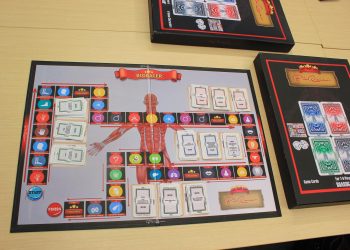
Award-winning board game helps public health students study for exams by having fun
A U of T Scarborough professor and a small group of students have developed an…